
Reviews 

When a Fire Pit Explosion Causes Lasting Disfigurement
A backyard or tabletop fire pit should create warmth and ambiance—not lifelong scars. Yet hundreds of consumers across the U.S. have been hospitalized after flame jetting explosions from alcohol or gel-fueled fire pits. These blasts often occur when someone refills a device they believe is extinguished. Invisible ethanol vapors ignite, creating a blowtorch effect that sprays fire onto anyone nearby.
Victims often suffer second and third-degree burns, deep thermal injuries, hypertrophic scarring, and facial disfigurement. Many require skin grafts, reconstructive surgeries, and years of scar management therapy. These injuries are not cosmetic—they are catastrophic and life-altering.

Texas Product Liability Lawyer, David P. Willis, is a Board-Certified Personal Injury Trial Lawyer licensed in Texas and New York. A former Attorney for the Supreme Court of Texas, he has handled complex product liability and catastrophic injury cases for more than 40 years. Mr. Willis represents victims of defective fire pits, ethanol fuel explosions, and other hazardous consumer products nationwide. His firm investigates whether manufacturers, distributors, or retailers failed to meet ASTM and CPSC safety standards or warn about known dangers that caused severe burns, scarring, or disfigurement.

Doctors classify thermal burn injuries by degree:
Patients with ethanol burn injuries also risk chemical burns and inhalation injuries from vaporized alcohol. Scarring is common due to uneven healing and tissue contracture. Surgeons may perform split-thickness grafts, tissue expansion, or microsurgical reconstruction for faces, hands, or necks.
Even after surgery, victims live with keloid scars, nerve hypersensitivity, or loss of mobility in joints. These physical and psychological consequences form the core of disfigurement damages in a lawsuit.
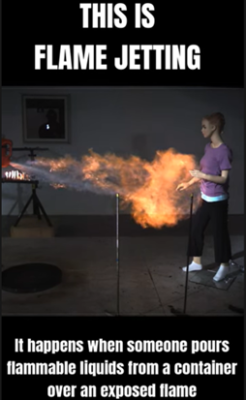
Flame jetting explosions are not user error—they are foreseeable design failures. Under product liability law, any company in the distribution chain can be held responsible when a product is defective in design, manufacture, or warnings.
1. Defective Design
Many tabletop fire pits are defective along with many portable ethanol burners as they lack built-in safety mechanisms to prevent refueling while hot. Safe alternatives exist—such as one-way fill valves, flame arrestors, and fuel canisters with vapor seals—but manufacturers often omit them to reduce cost. The makers of these fire pits and fuel suppliers could have made these fire pits less dangerous, but chose not to.
Failing to incorporate such devices may qualify as defective design under Restatement (Third) of Torts: Products Liability §2(b).
2. Failure to Warn
A product can also be defective if it fails to warn consumers about invisible flames or refueling hazards. In numerous lawsuits, victims reported that warning labels were tiny, hidden under the base, or missing entirely.
The Consumer Product Safety Commission (CPSC) has warned that products requiring consumers to pour liquid alcohol into open bowls violate ASTM F3363-19, the voluntary safety standard for liquid-fueled fire pots.
3. Retailer and Online Marketplace Liability
Under strict liability law, sellers—including big-box retailers and online platforms—can be jointly responsible for selling unreasonably dangerous products. Retailers who fail to remove recalled fire pits or continue selling noncompliant units may share liability for resulting injuries.
In addition to strict liability, plaintiffs may allege:
Victims in a tabletop fire pit injury lawsuit may recover compensation for medical expenses, lost wages, pain and suffering, emotional distress, and permanent impairment. In extreme cases, where a person suffers severe disfigurement, courts may also award disfigurement damages, recognizing both physical and psychological trauma.
Fire pit and fuel burn lawsuits have been filed against:
Each case requires expert investigation, including:
To prove damages, attorneys often gather:
These records establish causation and permanence—the cornerstone of any burn or disfigurement claim.
Courts recognize that scarring and disfigurement are not purely physical injuries. Permanent burns to the face, neck, or hands can devastate a person’s social confidence, employability, and emotional well-being.
Claims may include compensation for loss of quality of life, emotional distress, and physical pain and suffering.
Victims often endure multiple reconstructive surgeries, scar-release procedures, and laser treatments—each carrying its own risk of pain, complications, and renewed trauma.
Time is critical after a fire pit explosion. Burn victims or families should preserve the fire pit, fuel bottle, packaging, and receipts before discarding anything. The device should never be altered, cleaned, or tested without expert supervision.
Legal deadlines—known as statutes of limitation—vary by state but generally range from one to four years. In wrongful death cases from fire pit explosions, deadlines may be shorter. Retaining counsel early allows attorneys to issue spoliation letters and ensure evidence is protected before manufacturers destroy it. Talk to a Lawyer Today to find out what filing deadlines apply in your case.
Several manufacturers and retailers have issued CPSC recalls for ethanol and gel fuel fire pits linked to flame jetting and pool fires. Consumers should review official government data before using any fire pit product. Recommended resources:
Flame jetting happens when alcohol vapors ignite during refueling, turning the fire pit or fuel bottle into a torch. This occurs because ethanol and isopropyl fuels can ignite invisibly, making users believe the flame is out when it’s not. Most explosions result from poor design or lack of flame arrestors, not user error.
Liability may extend to the manufacturer, distributor, importer, or retailer. If a company sold a defective or noncompliant fire pit, or failed to warn about invisible flames, it can be sued under product liability laws. Even online marketplaces may share responsibility for distributing dangerous products.
Yes. The U.S. Consumer Product Safety Commission (CPSC) has recalled multiple tabletop fire pits and pourable alcohol fuels for violating ASTM F3363-19 safety standards. These recalls involve brands like Colsen, FLIKRFIRE, and Five Below, due to severe burn and explosion risks.
Victims often sustain deep partial-thickness or full-thickness burns requiring skin grafts, debridement, and reconstructive surgery. Common outcomes include keloid scars, contractures, and disfigurement of the face, hands, or neck—areas that profoundly affect both function and appearance.
Compensation may include medical expenses, reconstructive surgery, pain and suffering, emotional distress, scarring and disfigurement damages, lost wages, and future care costs. In cases involving gross negligence or ignored recalls, punitive damages may also be available.
Evidence often includes the burned fire pit, fuel container, warning labels, packaging, purchase receipts, and expert testing. Fire investigation specialists can prove noncompliance with safety standards or defective design (like lack of flame guards or venting). Preserving the product is crucial.
Most states give two to four years from the date of injury to file a product liability claim. However, wrongful death cases may have shorter deadlines. It’s essential to contact a lawyer quickly so evidence can be preserved and the statute of limitations protected.
Strong cases include burn center records, operative and graft reports, scar photographs, and testimony from plastic surgeons. Psychological evaluations can document depression, anxiety, or loss of self-image—important for pain, suffering, and emotional distress compensation.
Online sellers can still be held liable if they marketed or distributed defective products. Amazon and other retailers have faced lawsuits for continuing to sell recalled fire pits and pourable alcohol fuels that failed to meet safety standards.
An experienced attorney can investigate the product’s defect, retain expert witnesses, and prove liability under state and federal safety standards. Attorney David P. Willis, Board-Certified in Personal Injury Trial Law and licensed in Texas and New York, has handled complex burn and product defect cases for over 40 years, securing justice and compensation for victims nationwide.
 Product liability attorney David P. Willis has successfully litigated catastrophic injury and product defect cases nationwide for more than 40 years.
We investigate whether manufacturers, distributors, or retailers violated safety standards or failed to recall known hazards. Our team works with medical experts, fire engineers, and product safety consultants to prove liability and maximize compensation.
All Cases are Handled on a Contingency Fee Basis. No Fees or Expenses Ever Charged Unless You Win.

Copyright © 2025 All Rights Reserved.
FirePitLawsuits.com – National investigations of alcohol-fueled fire pit explosions and burn injuries. * Willis is Board Certified in Personal Injury Trial Law (since 1988), certified by the Texas Board of Legal Specialization.Representing injured clients nationwide through association with local attorneys in compliance with each state’s bar rules. Licensed in Texas and New York. Willis Law Firm, 5005 Riverway Drive, Suite 160, Houston, Tx. – Principal Place of Business – All meetings by appointment only.
Acknowledgment & Thank You – Certain Safety Images and Public-Education Materials, Alerts, and Warnings referenced on this site are courtesy of Health Canada and the CPSC.