ASTM F3363-19: The Fire Pit Safety Standard Manufacturers Ignored
If you’ve been injured by a tabletop or ethanol-fueled fire pit, the letters ASTM F3363-19 may determine whether the product was defectively designed. This standard — created by the American Society for Testing and Materials (ASTM) — outlines the minimum safety requirements for liquid- and gel-fueled fire features sold to consumers. When manufacturers skip or ignore these guidelines, catastrophic flame-jetting explosions and burn injuries often follow.
Attorney David P. Willis, a Board-Certified Personal Injury Trial Lawyer (Texas Board of Legal Specialization since 1988) and former attorney for the Supreme Court of Texas, helps victims nationwide to preserve and gather critical fire accident evidence, pictures, receipts, products prove that companies violated or disregarded this crucial safety standard.
What Is ASTM F3363-19 in Fire Pits Cases?
 ASTM F3363-19 is the voluntary safety standard governing the design, construction, labeling, and testing of portable fire features fueled by alcohol-based liquids or gels.
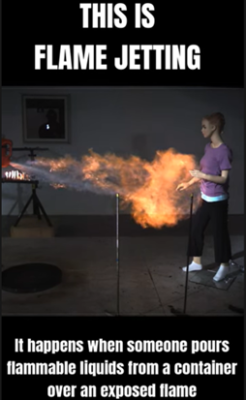
Published in 2019, it was developed after numerous CPSC investigations and burn-center reports showed identical hazards across multiple brands. Its purpose is to eliminate flashback ignition, vapor explosion, and flame jetting — the sudden torch-like blast of burning fuel that has maimed hundreds of users. Although voluntary, once a standard like ASTM F3363-19 exists, it becomes the industry benchmark for reasonable safety. n court, failure to follow it can be powerful evidence of negligence or product defect in a fire pit burn injury lawsuit.
Why ASTM F3363-19 Was Created
Between 2010 and 2018, hospitals treated thousands of burn victims from gel-fuel and ethanol fire pots. Investigators found nearly every product shared the same flaw — no flame arrestor or vapor-containment design. Manufacturers relied on marketing words like eco-friendly or clean-burning while ignoring basic fire-science principles.
The ASTM committee that drafted F3363-19 included engineers, consumer-safety advocates, and federal regulators. Its goal was to create a consistent national standard to prevent recurring tragedies like the NAPA Home & Garden, Real Flame, and Bond Manufacturing explosions.
Key Safety Requirements Under ASTM F3363-19
While the full document is proprietary, its main safety principles are publicly summarized. A compliant fire feature must:
These steps sound simple — but many imported or online-sold fire pits omit several of them entirely.
Common Failures of Fire Pits to Meet ASTM F3363-19
Evidence from recalls and lawsuits shows repeated violations of ASTM F3363-19, including:
Each of these omissions directly increases the likelihood of a flashback explosion.
Why ASTM Compliance Matters in a Fire Pit Burn Lawsuit
Courts often view compliance with ASTM standards as proof of due care. Conversely, non-compliance is strong evidence of negligence or design defect.
When manufacturers skip ASTM F3363-19 testing or sell non-compliant units:
In litigation, attorneys use engineering experts to compare the defective product against ASTM requirements and demonstrate precisely how it failed to meet industry norms.
CPSC Recalls Referencing ASTM F3363-19
Several CPSC recalls now cite the ASTM standard directly:
These recalls confirm that failure to follow ASTM F3363-19 is a recognized federal safety issue, not a theoretical standard.
How to Preserve Evidence After a Fire Pit or Gel Fuel Explosion
Preserving evidence is essential for building a strong case. Victims should:
How Attorneys Use ASTM F3363-19 in Fire Pit Litigation
Attorney David P. Willis and his expert team use the ASTM standard in several ways:
Defining the Standard of Care
Showing that safer, compliant designs existed and were affordable.
Demonstrating Foreseeability
Manufacturers knew or should have known that omitting flame arrestors created explosion risks.
Supporting Punitive Damages
Willful disregard of ASTM F3363-19 can justify additional punishment for reckless conduct.
Establishing Expert Testimony
Fire-science and materials experts rely on ASTM criteria to explain to juries how a proper design would have prevented the injury.
How Consumers Can Check for Compliance
While most packaging doesn’t quote the entire standard, consumers can look for clues such as:
If your device lacks any safety certification or warning about refueling, it’s likely non-compliant.
What Non-Compliance Means for Your Case
If your fire pit or fuel container does not meet ASTM F3363-19, that fact alone can:
Attorney Willis’s team gathers fire flashback ignition, vapor explosion, and flame jetting scene accident evidence, engineering data and expert reports to document these failures and use them as powerful trial evidence.
ASTM F3363-19 and the Role of the CPSC
Although ASTM F3363-19 is technically voluntary, the CPSC routinely references it in warning letters and recalls. The Commission expects manufacturers to adopt it or demonstrate equivalent safety performance.
Failure to do so can trigger enforcement actions, fines, and mandatory recalls.
Nationwide Legal Help for Victims of Non-Compliant Fire Pits
 If you were burned by an ethanol or gel-fuel fire feature that failed to meet ASTM F3363-19, you may be entitled to compensation for your injuries. Attorney David P. Willis has more than 40 years of experience handling product-defect and explosion lawsuits. He is Board Certified in Personal Injury Trial Law by the Texas Board of Legal Specialization and represents clients nationwide with local-counsel partners.
Free Consultation — No Fees Unless We Win
Nationwide Representation for Fire Pit Explosion Victims