
Reviews 

To the naked eye, an ethanol fire pit can look calm — or even extinguished. But beneath the surface, invisible flames and trapped fuel vapors may still be burning. When new fuel is poured in, the vapors ignite instantly, turning a decorative tabletop burner into a fireball.
These silent, invisible flames are the hidden cause of hundreds of burn injuries and explosions across the United States. Victims often describe seeing “nothing at all” right before the blast. The danger lies not in user error, but in scientifically predictable vapor ignition — something every responsible manufacturer should have prevented.
At FirePitLawsuits.com, Attorney David P. Willis investigates and pursues claims for victims injured by ethanol and gel-fuel explosions. A Board-Certified Personal Injury Trial Lawyer (Texas Board of Legal Specialization, since 1988) and former attorney for the Supreme Court of Texas, he represents clients nationwide through association with local attorneys in all 50 states.
Ethanol and similar alcohol-based fuels burn with a blue flame that emits little visible light. In bright daylight or under artificial lighting, the flame becomes almost completely invisible. Users believe the fire pit is extinguished when it is still burning at several hundred degrees Fahrenheit.
Even when the visible flame is gone, vapor pockets continue to form inside the burn chamber. These vapors are heavier than air and spread just above the liquid surface. When disturbed — for example, by pouring in more fuel — the vapors mix with oxygen and ignite instantly.
This phenomenon is not speculation; it’s documented in fire-science literature and confirmed in CPSC recall findings. Ethanol fire pits are particularly prone to this danger because they lack flame-indicator additives or temperature shutoff devices.
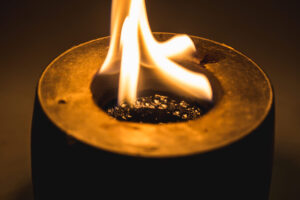 The invisibility of ethanol flames comes down to chemistry. Ethanol combustion produces primarily carbon dioxide, water vapor, and blue-spectrum light — with minimal yellow or orange wavelengths that the human eye detects easily. Without those longer wavelengths, the flame disappears under normal lighting conditions.
In professional or industrial settings, this problem is mitigated by:
In consumer tabletop products, however, these safeguards are rarely present — making the average home environment as hazardous as an unregulated laboratory.
Invisible flames are only part of the danger. The greater threat is vapor ignition, which occurs when residual ethanol vapors ignite away from the liquid source and flash back into the container.
When fuel is poured into a vessel that appears cool, the stream of liquid disturbs the hot vapor layer. The vapor ignites first — not the liquid — producing a rapid alcohol flashback that travels into the bottle and ejects burning fuel. The result is a flame-jetting explosion that can reach 5–10 feet outward in milliseconds.
This sequence has been demonstrated repeatedly in laboratory settings and cited in ASTM F3363-19 (Standard Specification for Firepots, Fuel Gel Containers, and Liquid Alcohol Burners). Despite these standards, many consumer fire pits on the market still violate these safety principles.
These findings dismantle the defense often raised by manufacturers — that consumers “should have seen the flame.” Science proves they couldn’t.
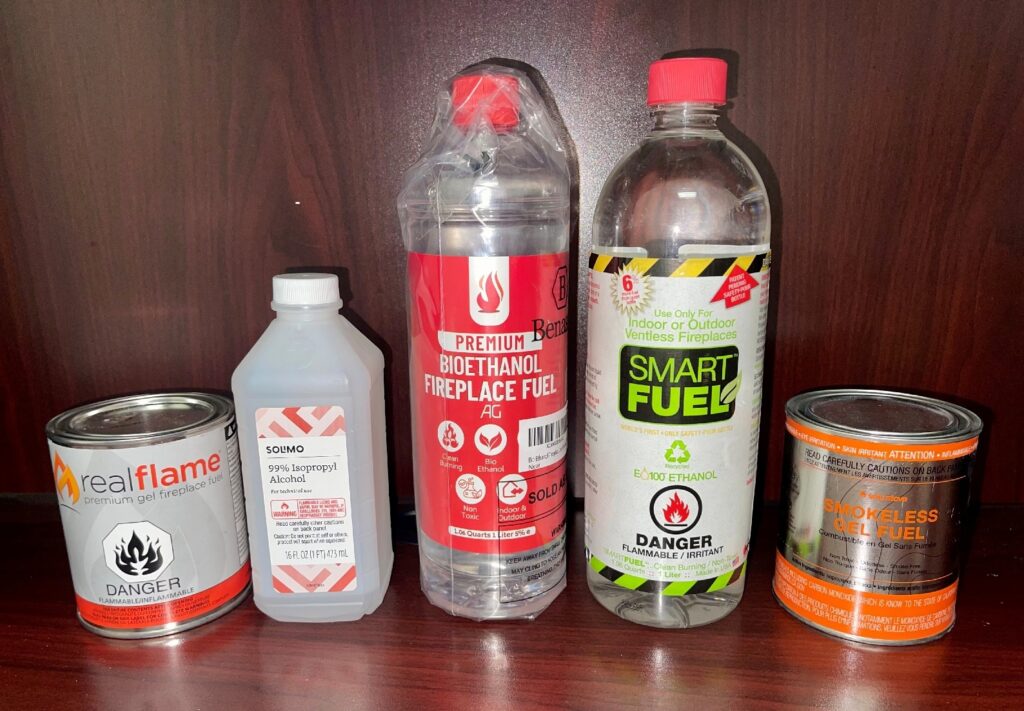
Despite years of data, many companies continued to sell open-pour ethanol fuels and tabletop burners without adding the most basic safety measures. Some even marketed the products as safe for indoor use or smokeless alternatives to candles.
Omissions that constitute negligence include:
Every one of these engineering steps was feasible, inexpensive, and well-known in the fire-safety industry.
The Colsen (2025) and Five Below (2025) tabletop fire pit recalls, along with the CPSC Consumer Alert (Dec 2024), directly mention invisible flames and vapor ignition as root causes of explosions. The recalls emphasize that alcohol-fueled fire pits can appear extinguished when they are still hot enough to ignite vapors instantly.
Together, these actions prove federal recognition that invisible flames and vapor ignition are predictable hazards — not unforeseeable accidents.
Victims typically sustain injuries while refueling or standing nearby:
These injuries often require multiple surgeries, lengthy hospitalization, and extensive rehabilitation. Many victims, children and bystanders are severely burned from the suddenness of the event, not realizing there was still a flame inside the fire pit.
Simple and inexpensive safeguards could have prevented most ethanol fire pit explosions:
The failure to adopt these measures forms the foundation for design-defect and failure-to-warn lawsuits against negligent manufacturers.
Invisible-flame and vapor-ignition cases fall squarely under product-liability law. Plaintiffs may allege:
Attorney David P. Willis and his team use CPSC recall evidence, ASTM documentation, and expert fire-science testimony to establish that the explosions are foreseeable results of bad design, not misuse.
Ethanol burns with a blue, low-luminance flame invisible under most lighting conditions. Many victims genuinely believed the flame was out.
The CPSC advises waiting until the burner is completely cool — often 30 minutes or longer. Even slight warmth can reignite vapors.
Not by itself, but failing to warn users or design against the foreseeable hazard constitutes a design defect under product-liability law.
Yes. The Colsen and Five Below recalls, and the CPSC Consumer Alert, all reference invisible flame and vapor ignition dangers.
Yes. Victims who followed instructions yet suffered burns may still have strong fire pit injury lawsuit, because the hazard was not adequately disclosed or controlled.
 Attorney David P. Willis has handled major explosion and burn cases for more than four decades. He is Board Certified in Personal Injury Trial Law by the Texas Board of Legal Specialization, and a former attorney for the Supreme Court of Texas. Licensed in Texas and New York, he represents clients across the U.S. through partnerships with local counsel.All cases are handled on a contingency basis — no legal fees unless compensation is obtained
If you or a loved one were burned when a fire pit that looked “out” suddenly exploded, you are not alone. Invisible flames and ethanol vapor ignitions are known, preventable hazards. Manufacturers had the science and the data — they just chose not to act.
Free Consultation — No Fees Unless We Win
Nationwide Representation with local-counsel partners

Copyright © 2025 All Rights Reserved.
FirePitLawsuits.com – National investigations of alcohol-fueled fire pit explosions and burn injuries. * Willis is Board Certified in Personal Injury Trial Law (since 1988), certified by the Texas Board of Legal Specialization.Representing injured clients nationwide through association with local attorneys in compliance with each state’s bar rules. Licensed in Texas and New York. Willis Law Firm, 5005 Riverway Drive, Suite 160, Houston, Tx. – Principal Place of Business – All meetings by appointment only.
Acknowledgment & Thank You – Certain Safety Images and Public-Education Materials, Alerts, and Warnings referenced on this site are courtesy of Health Canada and the CPSC.